
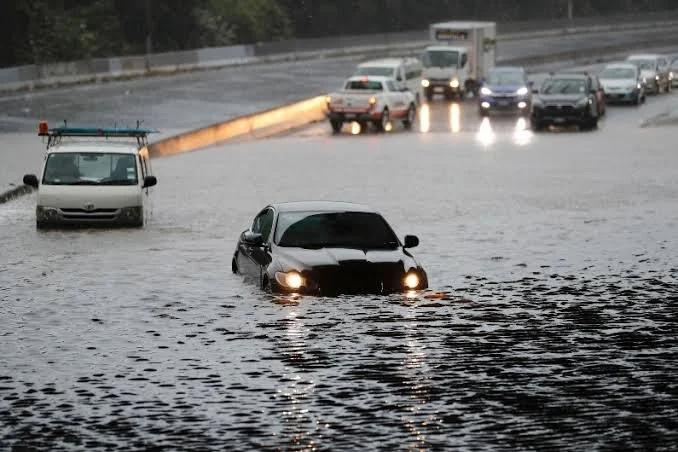
New Research: Lagos Faces $50 Billion Infrastructure Gap as Flooding Crisis Deepens
Lagos needs $50B in infrastructure investment — but has received under $1B/year for a decade.
📊 Key findings:
• 600,000+ new residents added yearly
• ₦106.6B spent on drainage (2025–26) — yet flooding worsened
• Waste collection at just 20–30%, despite 440+ licensed operators
• Capital budget execution as low as 4% in past years
💡 One bright spot: the Ikosi/Ketu bio-digester — a self-sustaining, community-level model already cutting emissions and waste.
Without stronger financing, execution & coordination, Lagos faces up to $40B in climate-related costs by 2050.
Full report & documentary in production.
#LagosFloods #UrbanInfrastructure #ClimateResilience #Lagos #NigeriaDevelopment
LAGOS — July 2026. A new research study has found that Lagos State’s escalating flood crisis is not primarily a planning failure, but a delivery gap — the result of a structural financing shortfall, weak budget execution, and fragmented governance, compounded by one of the fastest-growing urban populations in the world.
The study, conducted over several weeks and drawing on Lagos State’s own planning documents, budget records, environmental assessments, and agency data, examined the state’s development strategy, infrastructure spending over the past sixteen years, waste management systems, and major projects including the Lagos–Calabar Coastal Highway and the Lekki corridor.
Key Findings
The core gap: Lagos State’s own planning documents estimate a $50 billion infrastructure investment need, against actual investment of under $1 billion per year over the past decade.
Growth outpacing capacity: Lagos adds roughly 600,000 residents annually — comparable to a mid-sized city’s population every year — with the state population projected to exceed 32 million by 2052, up from 22 million today.
Spending up, results flat: The state budget grew nearly tenfold in naira terms since 2011, reaching ₦4.4 trillion in 2026. However, the naira devalued by a comparable margin over the same period, meaning real infrastructure spending capacity has likely grown far more modestly than headline figures suggest. Historical capital budget execution has ranged as low as 4% in some years.
Drainage spending without results: The state spent ₦106.6 billion on drainage construction and dredging between 2025 and early 2026 — a period in which flooding visibly worsened rather than improved, pointing to execution and maintenance gaps rather than a lack of funding alone.
Waste management shortfall: Despite an active network of over 440 licensed waste operators, the study found the citywide waste collection rate remains at only 20–30%, with blocked drains from uncollected refuse identified as a direct contributor to flood severity.
Regulatory gaps: The study documented cases where building and development approvals were issued without valid environmental or drainage clearance, later requiring the Ministry of Environment to publicly declare those approvals invalid — evidence of coordination gaps between planning and environmental agencies rather than an absence of rules.
A working model exists: The study highlights the Ikosi/Ketu Market anaerobic bio-digester, commissioned in February 2026, as a proof-of-concept for decentralized, community-level infrastructure — converting market waste into biogas and compost, avoiding an estimated 9,000 tonnes of CO2-equivalent emissions annually, and operating on a self-sustaining revenue model.
Outlook
Based on the state’s own projections, the study finds that without a material change in financing scale, execution discipline, and inter-agency coordination, Lagos faces up to $40 billion in cumulative climate-related costs by 2050, with over 1.4 million residents already living in areas of direct flood risk today.
The research concludes that Lagos’s challenge is no longer primarily one of diagnosis — the state has identified its own structural problems accurately and consistently in public documents for over a decade. The opportunity, researchers note, lies in scaling proven, smaller-scale, community-anchored models such as the Ikosi bio-digester alongside stronger financing and transparency reforms, rather than relying solely on large centralized infrastructure programs.
This research study draws exclusively on publicly available government data, agency reports, and on-record official statements. A full findings report and accompanying documentary are in production.
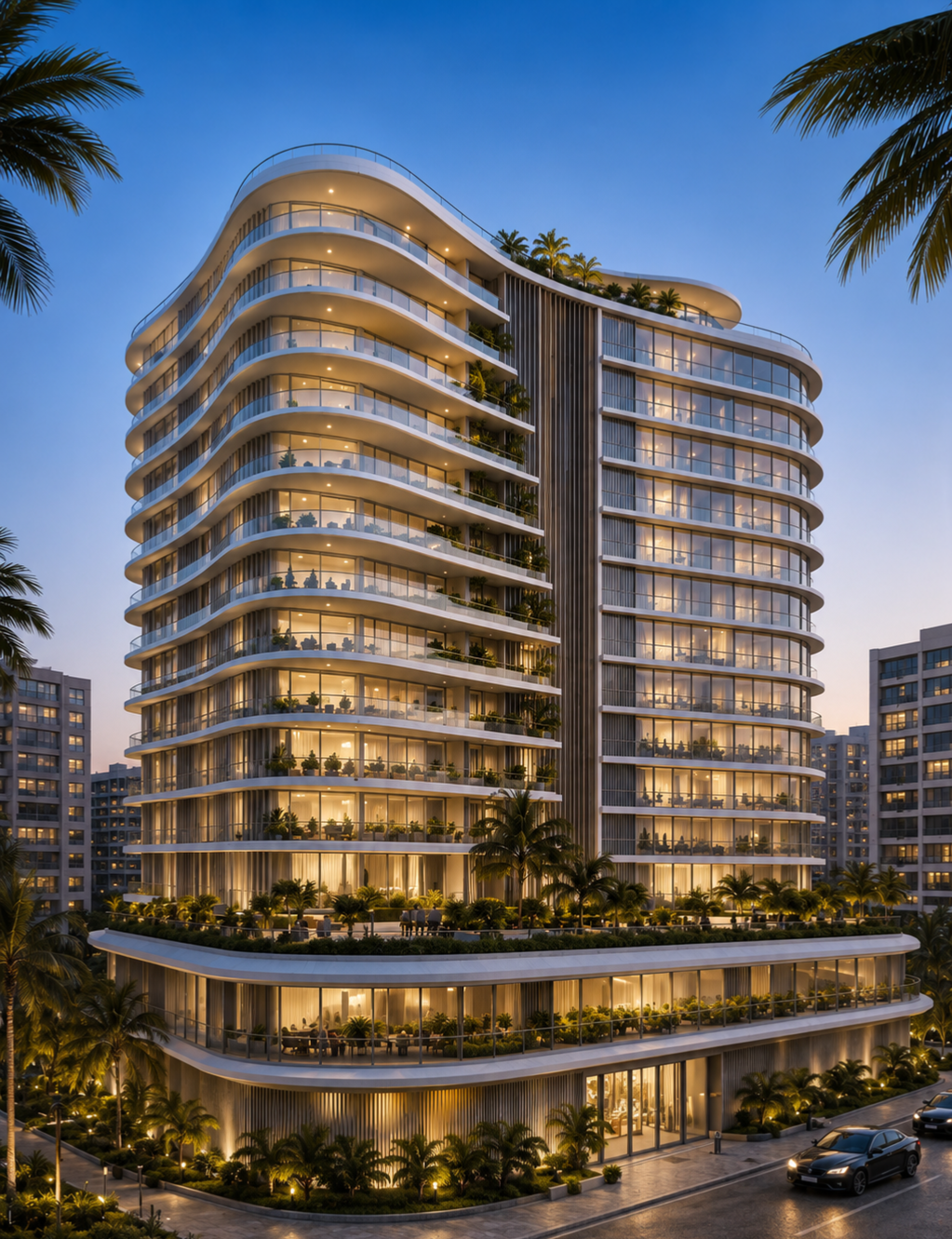
IHOD Completes Design Development for NEPTUNE Tower, Eko Atlantic City
NEPTUNE Tower — Design Development Complete
A new standard for high-rise living rises in Eko Atlantic City.
Ground+12 floors. Residences, offices & signature rooftop terrace. Designed for LEED certification.
IHOD Studio — redefining what luxury living looks like in Africa.
#IHOD #NeptuneTower #EkoAtlanticCity #RedefiningRealEstateInAfrica #LagosRealEstate #LuxuryLiving
Lagos, Nigeria — IHOD Studio has completed the design development phase for NEPTUNE Tower, a mixed-use high-rise set within Eko Atlantic City, Lagos — one of Africa’s fastest-growing luxury real estate markets.
Rising Ground+12 floors on a 1,695 sqm plot with 8,200 sqm of gross floor area, NEPTUNE Tower blends residential, commercial, and leisure functions into a single vertical live-work-play community. The development comprises 24 three-bedroom and 12 two-bedroom residences, two exclusive four-bedroom duplex penthouses, and a full-floor rooftop terrace designed as the building’s signature amenity. Ground-floor retail and a concierge-led lobby anchor the base, with premium office suites occupying the first two floors.
The design targets Green and LEED certification, incorporating passive solar orientation, natural ventilation, rooftop photovoltaic panels, rainwater harvesting, greywater recycling, and locally sourced, sustainably harvested materials.
With design development now finalized, NEPTUNE Tower advances toward the next phase of delivery — reinforcing IHOD’s continued commitment to redefining real estate across Africa.
IHOD Launches Technical Partnership Program: Faster Decisions, Smarter Capital
IHOD Technical Partnership Program for Real Estate Developers
Know before you build.
Get institutional-grade feasibility & design insight in 24–96 hours — not weeks.
Faster decisions. Fewer false starts. Smarter capital.
Because in real estate, clarity is the first return on investment.
#IHOD #RedefiningRealEstateInAfrica #RealEstateDevelopment #LagosRealEstate #EkoAtlanticIHOD Technical Partnership Program
Lagos, Nigeria — IHOD has introduced a Technical Partnership Program built around a simple premise: the earlier you have clarity, the more you save.
Developers now receive institutional-grade feasibility and design packages — architectural concepts, technical assessments, and project viability insights, in as little as 24 to 96 hours.
What once took weeks of scattered consultations now arrives as one decisive package, letting developers move on land acquisition, financing, or full mobilization with confidence, not guesswork.
The math is simple: faster insight means fewer false starts, reduced abortive costs, and capital deployed only where the numbers work. For developers entering Africa’s premium real estate markets, that speed is itself a competitive edge.
IHOD’s Technical Partnership Program positions the firm not just as a builder, but as the strategic advantage developers bring in before the real money moves.
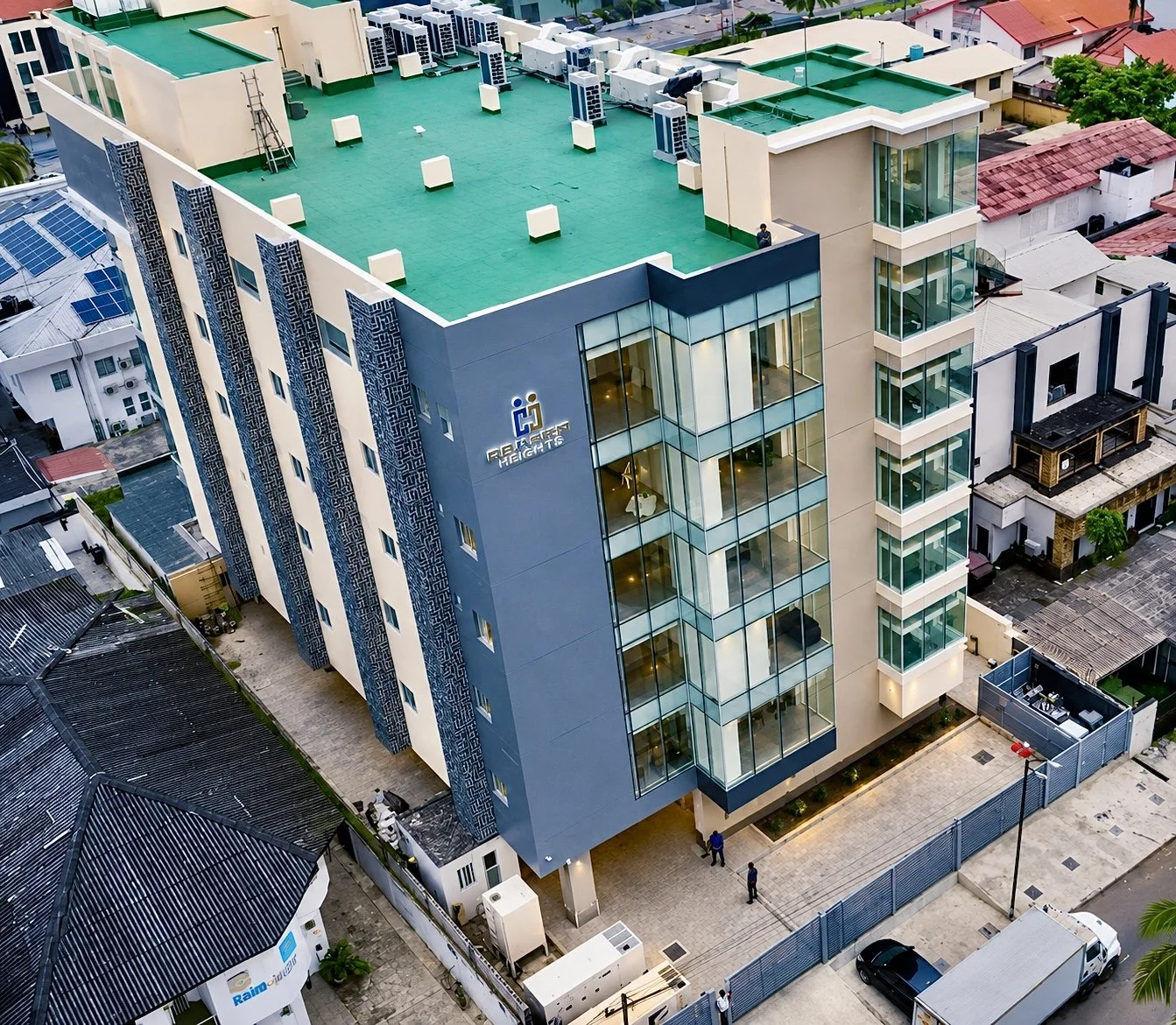
iHOD Delivers Design Milestone for Cedarcrest Hospitals, Victoria Island, Lagos
Cedarcrest Hospital — A Landmark in Healthcare Architecture
Six storeys. 4,000+ sqm. One of Victoria Island’s most advanced healthcare facilities.
IHOD delivered full in-country architectural services — exterior & interior design, and rigorous QA/QC — for this ultra-modern 55-bed hospital, setting a new benchmark for healthcare infrastructure in Lagos.
Where precision meets purpose — designing spaces that heal.
#IHOD #CedarcrestHospital #VictoriaIslandLagos #HealthcareArchitecture #RedefiningRealEstateInAfrica
iHOD is pleased to announce the successful completion of design development for Cedarcrest Hospitals, Victoria Island, Lagos, a compact ultra modern 55 bed multispecialty facility with a distinguished focus on Orthopaedics, Trauma, Prosthetics, Vascular, and allied surgical subspecialties.
Serving as the in country architect, iHOD contributed to the project under the direction of Isaac Olafimihan, working in close collaboration with Infrabees, the India based lead architect. Over a two year period, the two firms combined local regulatory insight with international clinical design expertise to shape a facility built to the highest standards of medical infrastructure.
The project was led by project managers Pro M Limited, with contractors Formwork Nigeria Limited delivering the build. Their coordination ensured the design intent translated seamlessly into buildable, code compliant execution. This scale of cross border collaboration, sustained over two years and across multiple disciplines, reflects the calibre of partnership required to bring a specialist healthcare facility of this nature to life.
iHOD extends its congratulations to Cedarcrest Hospitals on this significant milestone. Their vision for accessible, world class specialist care in Lagos has set a new benchmark for private healthcare infrastructure in Nigeria, and it has been a privilege to contribute to a project of such lasting value to the communities it will serve.
See more of iHOD’s healthcare and institutional portfolio under Projects.